The world is changing - often for the better.

Our podcasts and documentaries explore progress, possibility and the forces shaping a better future. From global health and climate solutions to history and innovation, we tell stories about the people and ideas changing what comes next.

Latest Episodes

Lead Poisoning Is Solvable. So What’s Been the Hold Up?

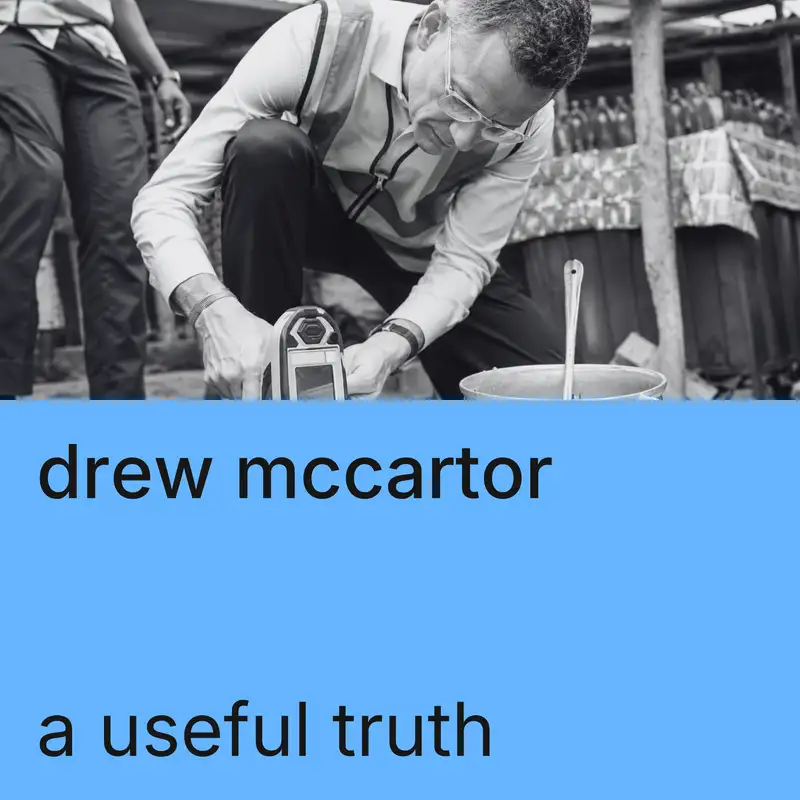
How do you get the world to pay attention to a problem it thinks it's already solved? Around a billion children are exposed to dangerous levels of lead. It can be hiding in cookware, spices and cosmetics, or released through industries like battery recycling. For a child, exposure can mean losing up to six IQ points - irreversible damage that, multiplied across hundreds of millions of children, becomes an enormous drain on human potential. And yet, unlike so many global challenges, we already know how to prevent it. Meet Drew McCartor, President of Pure Earth. For the past 17 years, Drew and his colleagues have been sounding the alarm about lead poisoning: gathering evidence, understanding the scale of the problem and building the playbook for how to solve it. Now, after decades of “yelling into the void”, the world is finally paying attention - and Drew believes we have an opportunity to eliminate lead poisoning altogether. In this episode: Why around a billion children are exposed to dangerous levels of lead The surprising places lead is still hiding - from cookware to spices What losing four to six IQ points means for a child - and an entire country How a Craigslist ad led Drew from unpaid intern to President of Pure Earth Why Pure Earth spent years wondering if they were crazy The young boy in Bangladesh who brought the human cost of lead poisoning home for Drew What changed when the world finally started paying attention Why Drew believes we can eliminate lead poisoning altogether About the title: A Useful Truth comes from a 1786 letter by Benjamin Franklin about lead poisoning: “You will observe with concern how long a useful truth may be known and exist before it's generally received and practiced upon.” Almost 250 years later, it feels remarkably apt. Timestamps: 00:00 A Useful Truth 00:55 Do you ever feel like something is wrong but no one will listen? 03:20 Haven’t we already solved lead poisoning? 05:00 What does lead poisoning actually mean? 07:43 The curse of the Industrial Fairy 10:20 What’s harder: solving lead poisoning or convincing people it matters? 12:31 From Craigslist ad to President of Pure Earth 14:50 How do a group of hippies change the world? 17:36 Midpoint reflections 20:09 When the world finally started paying attention 22:57 What happens when you get the thing you’ve spent 17 years working towards? 25:07 Lead and the global funding crisis 29:06 The story that makes lead poisoning real 33:58 The solutions are already here 34:46 What happens if we raise the IQ of a billion children? 39:01 What’s possible if we solve lead poisoning? 44.59 Final Thoughts Curious to find out more? 👉Check out the Pure Earth website 👉Support their work 👉 Listen to Drew's TED Talk 👉 The Pure Earth SCALE Initiative to protect 500 million children from lead exposure About Fix The News: Fix The News is a solutions-focused media platform sharing stories from the frontlines of progress - exploring what’s working in the world and the people making it happen. Subscribe & follow: If you enjoyed this episode, follow the podcast and leave a review - it helps more people find these stories. Production credits: Hosted by Angus Hervey and Amy Davoren-Rose Produced by Fix The News Audio production: Anthony Badolato, Hear That!  This episode was produced in Australia on the lands of the Gadigal, Wurundjeri and Woi Wurrung peoples.
#36 of NewsFix

India’s Coal Shift. Gaza Classrooms. Moon Ballet.

This week’s headlines include – India’s surprising shift away from coal; New York’s safest summer on record; the tiny bird that sparked a conservation movement across Ecuador; children returning to school amidst the rubble in Gaza; Thailand eliminating rubella; Cambodia clearing hundreds of square kilometres of landmines; an Ebola outbreak showing signs of slowing; elephants making use of Tanzania’s first official wildlife corridor; Indigenous co-management of marine reserves in New Zealand; and NASA’s extraordinary three-spaceship rehearsal for humanity’s return to the Moon. You can check out the full newsletter here. This podcast is brought to you by ⁠Fix The News⁠. Hosted by Anthony Badolato, ⁠Hear That!⁠ If you want to get in touch with the team, email amy@fixthenews.com

Can We Stop the Next Pandemic Before It Starts?

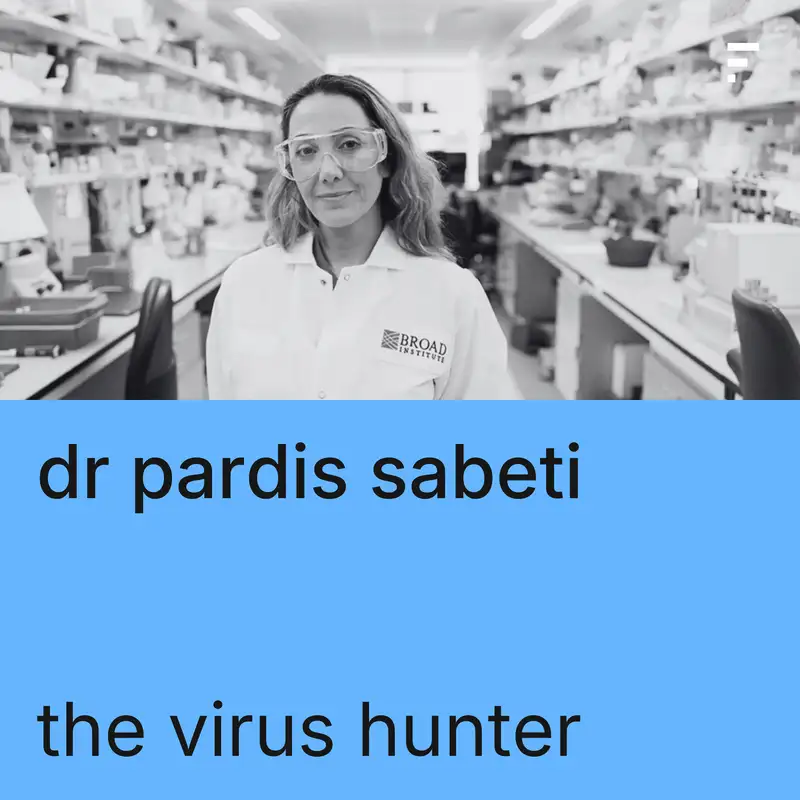
What if we could catch the next pandemic before it starts? For most of human history, we’ve discovered outbreaks after people start getting sick. But what if we could spot a dangerous virus as it emerges, track it as it spreads and give health workers the information they need to stop it - in real time? Meet Dr Pardis Sabeti, geneticist, disease hunter and professor at Harvard University. Pardis has spent more than two decades on the frontlines of some of the world’s deadliest outbreaks, from Lassa fever and Ebola in West Africa to COVID-19. Now, through Sentinel, she and her team are trying to build something even more ambitious: an early-warning system for infectious disease that can work anywhere - including communities across Africa where laboratory resources are limited and outbreaks can easily go undetected. From why many “emerging” diseases may actually be diseases we simply haven’t detected to the devastating consequences of global health funding cuts - this is a conversation about how close we are to changing our relationship with infectious disease, and what it will take to stop the next outbreak before it becomes a pandemic. In this episode: How Pardis and her team tracked Ebola as it spread through West Africa Why many “emerging” diseases may already be circulating How Sentinel is building an early-warning system for outbreaks What Rwanda got right with Marburg What global health funding cuts look like on the ground and in the lab Why stopping the next pandemic will take more than technology Why Pardis still believes we can build a world where outbreaks are stopped before they become pandemics Timestamps: 00:00 The Disease Hunter 00:42 If Pandemics Keep You Up at Night 02:51 Inside the 2014 Ebola Outbreak 03:38 The More You Test, the More You Find 04:39 Building an Early-Warning System for Disease 07:05 Are Diseases Emerging - or Are We Finally Detecting Them? 08:48 How Did Pardis Know COVID Was Coming? 10:36 Is Another Pandemic Inevitable? 11:43 What Well-Timed Funding Makes Possible 13:52 Why Every Person Matters in a Pandemic 15:26 How Rwanda Stopped Marburg 16:35 Why Ebola Is So Hard to Stop in the DRC 18:26 Midpoint Reflections 19:29 What Global Health Funding Cuts Look Like on the Ground 21:39 Laying Off a Third of Her Team 23:52 “Philanthropic Survivor’s Guilt” 26:59 How Do You Take On a Trillion-Dollar Problem? 29:08 Why Technology Alone Won’t Stop the Next Pandemic 31:57 “I’m a Student of Humanity” 34:03 The Work You Don’t Get to Finish Find Out More: 👉 Explore Sentinel 👉 Learn more about Pardis Sabeti and the Sabeti Lab 👉 Discover The Audacious Project at TED 👉 Read about Sentinel’s $100 million MacArthur 100&Change award About Fix The News: Fix The News is a solutions-focused media platform sharing stories from the frontlines of progress - exploring what’s working in the world and the people making it happen. Subscribe & follow: If you enjoyed this episode, follow the podcast and leave a review - it helps more people find these stories. Production credits: Hosted by Angus Hervey and Amy Davoren-Rose Produced by Fix The News Audio production: Anthony Badolato, Hear That!  This episode was produced in Australia on the lands of the Gadigal, Wurundjeri and Woi Wurrung peoples.

The Invention of Doubt: Science and the Problem with Certainty

We expect science to give us answers. But what if its greatest breakthrough was learning to be wrong? For most of human history, we wanted knowledge to be certain. Then, around 400 years ago, something changed. After discovering that much of what we thought we knew about geography, astronomy, medicine and the natural world was wrong, a new idea took hold: perhaps the best way to understand the world was to stay open to being wrong. In this episode of A Short History of Saving the World, Angus Hervey and historian Ada Palmer trace the invention of scientific doubt, from ancient Greek sceptics and Aristotle’s eels to Francis Bacon, the Scientific Revolution and AI. Along the way, they arrive at a bigger question: in an age obsessed with certainty, are we still willing to change our minds?  In this conversation: Why is being wrong a feature of science, not a failure? Did Francis Bacon really invent the scientific method? What can ants, spiders and honeybees teach us about knowledge? Why do some scientific ideas get attention while others are ignored? Is distrust of science always a bad thing? And could AI change not just what we know, but how we discover it? Timestamps: 00:55 Why Humiliation Might be the Real Origin of Science? 01:53 Skeptical vs Dogmatic Ideas 05:35 The Ancient Skeptics 09:38 Did We Really Invent the Scientific Method? 12:04 Who Is Invention For? 13:27 Francis Bacon: Science as Charity 16:19 Ants, Spiders and Honeybees 18:05 Progress: Designed or Random? 21:27 When Does an Idea Find Its Time? 22:08 Toads That Look Like Turds 24:09 Is Science a Status Revolution? 27:00 STEM, Social Sciences and Humanities 28:47 Are We Living in a Great Age of Scientific Discovery? 34:41 Is Trust in Science Collapsing? 36:39 Conspiracy Theories 37:46 Breaking a Two Thousand-Year-Old Hypothesis About Humanity 42:04 Why Science Is Actually Delightful 43:22 Is AI the New Leonardo da Vinci? 49:19 Are We Still Capable of Being Wrong? 53:18 Footnotes Subscribe & follow: If you enjoyed this episode, follow the podcast and leave a review - it helps more people find these stories. Production credits: Hosted by Angus Hervey and Ada Palmer Produced by Amy Davoren-Rose, Fix The News Audio production: Anthony Badolato, Hear That!
#35 of NewsFix

Digital Islands. Census. Dark Oxygen.

This week’s headlines include – the internet revolution connecting remote Pacific islands; a breakthrough pancreatic cancer treatment gets FDA approval; India prepares to count 1.4 billion people; salmon surge back into the Klamath River; the return of wild horses to Kazakhstan; falling transport emissions in China; AI-guided brain surgery; and the discovery of “dark oxygen” deep beneath the Earth. You can check out the full newsletter edition here. This podcast is brought to you by ⁠Fix The News⁠. Hosted by Anthony Badolato, ⁠Hear That!⁠ If you want to get in touch with the team, email amy@fixthenews.com

Hosts

Amy Davoren Rose

Amy Davoren Rose

Host of Fix The News
Angus Hervey

Angus Hervey

Host of Fix The News
Anthony Badolato

Anthony Badolato

Host of NewsFix
Ada Palmer

Ada Palmer

Host of A Short History of Saving The World